In this blog, we see how Dayitwa NGO’s 7 powerful initiatives made education reconstructs lives via their real case studies across India.
Imagine an era in which all children have an equal opportunity to study, despite how many live in an impoverished community or have no way to pay for education or school.
That’s exactly what Dayitwa NGO is making possible all over India. They’re not just putting kids in classrooms. They’re completely changing how education works in places where excellent schools seemed impossible.
From training with a language that children understand easily to educating trainers who genuinely care, Dayitwa demonstrates that when individuals receive the appropriate resources and assistance, incredible things happen.
These are not merely positive stories; they are about real families whose lives have changed because a young youngster began to read or a girl went to school rather than marrying prematurely.
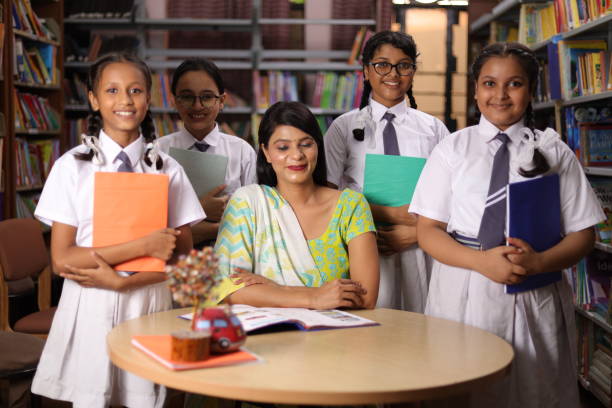
Empowering Futures Through Education
An Education Initiative of Hope in Bihar
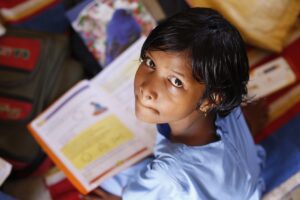
Meet Priya from a small village in Bihar. Just two years ago, she couldn’t read her own name. Her parents thought school was pointless for girls because they would just get married after all.
But then something remarkable happened: one day, a team from Dayitwa Organization arrived in her area, and everything changed. Priya now reads stories to younger children and hopes to become a teacher herself. Her experience is no longer unusual; it happens thousands of times across rural India.
India’s education system has progressed significantly. According to the Annual Status of Education Report (ASER), the rural literacy rates have risen from 64.7% to 74.7% in the recent decade. But here’s the thing: figures only convey part of the tale. What is actually important is how education can transform entire communities, one family at a time.
That’s where Dayitwa comes in. They’re not merely running schools or distributing books. They are reinventing what education can be when it is actually relevant to people’s lives and goals. Over the next seven stories, you’ll see how they do it.
Free Quality Education That Actually Reaches Kids
 In Ramesh’s village in Bihar, the nearest proper school was 15 kilometres away. Most families couldn’t afford bus fare, let alone books and uniforms. When Dayitwa NGO education programs set up a learning centre right in the village, 40 new kids started coming to class. This sounds simple, but it’s revolutionary.
They don’t just say education should be free, but they truly make it happen. They set up learning centres where all kids can walk to school. They provide books, uniforms, and even meals on tough days. But here’s what makes them different: they don’t copy city models. They ask each community what works best for them.
Case Study: Transforming Attendance in Rural Rajasthan
Before the Dayitwa NGO arrived in Khetri village, only 30% of kids came to school regularly. After the new learning centre opened, with local teachers and flexible timings that accommodated farming seasons, attendance increased to 85%. Parents finally felt heard and supported, and kids got a real chance.
Take little Anita, who used to miss school whenever her family needed help with crops. Now the center runs evening classes, so she can help her family and still learn. Her mom says it’s like having the best of both worlds.
Smart Classrooms That Make Learning Fun and Real
Picture kids in a village where electricity comes and goes in a loop that never ends, using tablets that work without internet to learn about the solar system. That’s happening in dozens of villages where Dayitwa brought technology that actually works in rural settings.
Technology in rural education isn’t about showing off fancy gadgets. It’s about making learning stick.
Dayitwa uses solar-powered devices and offline content that works even when the power goes out. Children learn in their native tongues with interactive lectures, activities, and films. Teachers who used to struggle reading textbooks are now using digital tools that bring science and math to life.
Case Study: Digital Revolution in Remote Assam
In three Assam villages where the internet barely reaches, After installing solar-powered smart classrooms. Math scores improved by 60% in one year because kids could finally see how algebra works through animated examples.
According to teachers, the most significant improvement is that students now like math class.
Ravi, a boy who once disliked science, today describes photosynthesis to anybody willing to listen. His teacher says digital lessons helped him visualise confusing concepts. His confidence has completely transformed.
Training Teachers Who Actually Want to Be There
 Sunita became a teacher because it was the only job in her village. She taught the way she learned, lots of memorising, but very little understanding.
Then Dayitwa’s education transformation NGO program changed everything. Now her students ask questions she never thought they’d dare to ask.
Good teachers make all the difference, but rural schools often get those who don’t know how to connect with students.
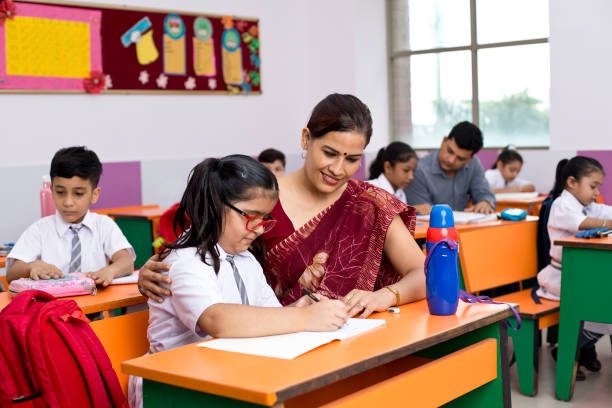
Dayitwa focuses on training local people who understand their community and care about the kids. They teach practical methods, storytelling, group work, and hands-on activities that help kids learn better.
Case Study: Teacher Transformation in Maharashtra
After Dayitwa’s six-month training, teachers in 15 villages adopted new methods. Student test scores went up by 40%, and dropout rates fell from 25% to just 8%. More significantly, teachers recovered their love of teaching.
Monday mornings used to annoy Deepak, a teacher in an Uttarakhand twin-room school. Currently, he is so excited to try new things alongside his students. There is a lot of vibrant conversation and laughing in his classroom nowadays.
Keeping Girls in School and Changing Mindsets
When 14-year-old Kavya’s parents started looking for a husband for her, everyone thought it was normal. But her teacher, trained by Dayitwa, convinced them to wait one more year. That year changed everything, Kavya topped her district in the 10th-grade exams.
Getting girls into school is one challenge. Keeping them there is another. This NGO organisation works with families and communities to change deep-rooted beliefs about girls’ education. They show parents real examples of how educated daughters can support their families. They make schools safer and more welcoming with better toilets, female teachers, and flexible timings.
Case Study: Preventing Child Marriage in Bihar
In five Villages of Bihar, Dayitwa’s workers prevented 47 child marriages over two years by keeping girls in school and working with families. Now, 89% of girls complete secondary school compared to 34% before. Parents became proud of their daughters’ achievements, and girls stayed in class instead of preparing for weddings.
Meera’s father used to say educating girls was a waste of money. He is currently discussing his child’s future employment as a government educator among the other residents. Her siblings seem desperate to continue her sister’s footsteps, as she becomes the only girl in the family to complete 12th grade.
Using Local Languages That Kids Actually Understand
Since he only spoke Santhali at home and everything was taught in Hindi, 8-year-old Bhola spent years sitting in class perplexed. Dayitwa finally grasped the purpose of education when he began teaching in his own tongue first, then progressively incorporating Hindi.
Kids learn better when they understand what’s being said. Their way of teachings creates content in local languages and trains teachers in multilingual methods. They don’t abandon standard languages, and they use local tongues as a bridge to help kids learn Hindi and English.
Case Study: Multilingual Learning in Odisha
In tribal villages where children spoke only the Odia dialect, Dayitwa provide resources that let them develop in the local language. Their skills of Reading comprehension improved by 70% in the first year. To consider this more is that kids felt smart instead of someone who knows nothing. Once they gained confidence, they eagerly tackled Hindi and English.
Subash, who struggled for two years thinking he wasn’t good at school, is now one of the top students. He switches between three languages like it’s nothing, and also helps classmates do the same.
Building Real Skills for Real Jobs
After finishing 10th grade, Rahul had two choices: work in the fields or migrate to the city for uncertain jobs. Then Dayitwa’s skill centre opened in his village, teaching computer repair and mobile servicing. Six months later, he started his own small business right at home.
Education isn’t just about passing exams; it’s about building lives. Dayitwa’s education idea runs skill development programs alongside regular education, teaching everything from computer literacy to solar-panel installation. They emphasise skills that are useful in rural areas so that young people can make good money without having to move away from their families.
Case Study: Madhya Pradesh’s Rural Entrepreneurship
Dayitwa’s centres in 12 villages trained 300 youth over 18 months. In just six months after training, 78% of them got employment or launched their own enterprises. The average monthly salary increased to ₹8,500 from ₹3,000.
Priya learned tailoring and embroidery through Dayitwa’s women’s program. She now employs four other women, supplying clothing to nearby towns. She loves watching her daughter grow up, seeing women as business owners, not just helpers.
Getting Whole Communities Excited About Learning
In Gokulpur village, parents used to complain that school was a waste of time. Now they organise evening classes where adults learn alongside their children. The village library that drew helped create is the busiest spot after the market.
Real change happens when whole communities get involved, not just kids. NGO’s Education program for children organises educational events for the community, other adult education programs, and provides help to villages so they can develop their resources to the next level. When parents understand the importance of education for their own lives, they turn into supporters for their children.
Case Study: Rajasthani Village Transformation
Three years after Dayitwa NGO arrives with their education transforming lives program in Devgarh village, adult literacy rose from 23% to 67%. The town opened its own library and computer centre. School attendance reached 96%, and children’s academic performance improved by 55%. Most remarkable: the village council now allocates 15% of its budget to education initiatives.
Ramesh Kaka, a 45-year-old farmer who learned to read through their adult program, now helps his grandson with homework every evening. He says the proudest moment of his life was reading the report card himself instead of asking someone else.
When You Look at It
Education can change everything, but only when it’s done right. Dayitwa isn’t just running schools or programs. They are demonstrating that amazing things can occur when communities are truly heard and collaborate with rather than having external solutions imposed.
These tales demonstrate what is possible, from Priya helping other children to read to entire towns turning into learning communities.
This is something that was planned. NGO changing lives through education thta building an impact in the lives of other individuals demands dedication, determination, and honesty. It is critical to think that every child, regardless of where they were born or their family circumstances, deserves an equal opportunity to learn and succeed.
Bear it mind these shifts are taking place right now, even if you are a mom or dad, instructor, neighborhood leader, or simply someone who values education.
They could be performed in further locations with additional funding. Help us guarantee that all kids has every chance to create their own story, one full with possibilities, education, and hope.
FAQ
Q1. What makes Dayitwa NGO’s approach to rural education different?
Ans. Dayitwa listens to each community’s needs rather than copying city models. They establish local learning centers, supply materials and meals, and use flexible timetables, allowing children who previously missed school to enroll without incurring additional expenditures or long commutes.
Q2. How does Dayitwa use technology in areas with little or no internet?
Ans. Instead of installing solar-electric digital classrooms, they offer tablets that are packed with non-online games, films, and interactive classes in local languages. Despite the lack of power or internet access, this keeps children engaged and enables them grasp things visually.
Q3. Can girls really stay in school longer through Dayitwa’s programs?
Ans. Yes. Dayitwa works with families and local authorities to improve attitudes against early marriage and girls’ education. In certain communities, they prevented dozens of underage marriages and raised girls’ secondary school completion rates from 34% to over 89%.
Q4. What community initiatives does Dayitwa run beyond children’s schooling?
Ans. The number of adults within a single village who are literate rose from 23% to 67%, and the entire community now contributes a portion of its earnings to educational initiatives.