
The progress of the nation depends not only on its economy, but also on the health and well -being of its people. In India, health is always considered a blessing, but when it comes to healthcare access , millions of people are still behind. Health care problem in India is not new – it has existed for decades, and despite many improvements and technological advances, the distance between health services and citizens is widespread. There are world-class hospitals and doctors who are recognized globallyCities like Delhi, Mumbai and Chennai attract medical tourists around the world. Nevertheless, in the same country, there are villages where people still have to travel miles to consult a Doctor Cutter cutter or buy basic medicines.This dual reality reflects the inequality of Deep Vanda origin in India’s healthcare system. This blog explores causes, influences and solutions to the health system’s problem in India, and highlights the role of both the government and voluntary organizations such as Dayitwa in bridging a bridge between the gap.
Understand the health care problem in India
The health problem is multidimensional. It is not limited to a lack of hospital or lack of doctors – it goes much deeper. Some of the usual problems are: Poor infrastructure in rural health stations. Crowded state hospital. High costs for private treatment. Lack of skilled doctors, nurses and paramedics. Limited health insurance coverage. Neglect of mental health and preventive care. For example, while a wealthy family in Delhi can easily access advanced operations at private hospitals, a poor Binn in Bihar may die from a treatable disease such as pneumonia due to delayed treatment. This strong contrast emphasizes why the health care system in India is not only a health problem, but also a social and economic challenge.
Causes behind the health system's problem in India
1. Different distribution of facilities Nearly 65% of India’s population lives in rural areas, but most modern hospitals are concentrated in cities Rural people are often based on small clinics, traditional therapists or poorly equipped government centers. This imbalance makes rural citizens more sensitive.
2. Lack of medical professionals India is facing a lack of doctors, nurses and specialists. According to WHO norms, there should be a doctor per 1000 people, but many districts in India fall far below this standard. Rural posts are not attractive due to poor facilities and lack of incentives.
3. The rising cost of treatment Private hospitals, though advanced, charge a highly high fees. A surgery or long -term treatment, such as cancer therapy, can clear the family’s full savings. With limited insurance shields, most people pay in their pockets, causing financial problems.
4. Weak public health structure Government hospitals are supposed to serve the masses, but they are often crowded, under -funds and understifted. The drugs are running, the devices are old, and patients sometimes wait hours to meet the Doctor Cutter.
5. Neglect mental health Mental health is still a prohibited in India. Diseases related to depression, anxiety and stress are on the rise, but there are very less trained psychiatrists and consultants. It is estimated, in India there are 1 psychiatrist per 100,000 people.
6. Lack of preventive awareness Preventive healthcare-vaccinated, regular investigations and lifestyle management-are not taken seriously. Diseases such as diabetes, hypertension and obesity are on the rise, but awareness campaigns are especially insufficient in rural areas.
Impact of Health Care Problems in India
The effects of health care problems in India progresses to hospitals. It affects the progress of families, communities and country. High mortality and disability rate Easily treatable diseases in the early stages are often fatal because people delay treatment or they cannot afford it. Maternal and infant death rates, despite improvement, are still higher than the global average.
Poverty and debt Healthcare costs are one of the main reasons that many Indian families fall into poverty. Sudden illness often forced families to sell land, jewelry or borrow money at the interest rate of interest. Inequality wide The poor part of the healthcare is quite quite Rich can afford private hospitals , while the poor often rely on or not treated low government hospitals. Reduced productivity Sick workforce is less productive. Frequent illness or poor health reduces a person’s functioning, which eventually affects the economy.
Neglected mental health The increasing cases of suicide, stress and frustration among students and operational professionals are proof that the neglect of mental health peacefully harms the society.
The government’s efforts to improve health care have introduced several schemes to reduce the problem of health care in India Some major initiatives include: Ayushman Bharat (PM-Jay): Provides 5 lakh health insurance per family per year for low-income )
National Health Mission (NHM):
Focus on rural healthcare and maternity-child health The government’s efforts to improve health care have introduced several schemes to reduce the problem of health care in India. Some big initiatives include: Ayushman Bharat (PM-Jay): Provides 5 lakh health insurance per year for low-income homes. National Health Mission (NHM): Focus on rural healthcare and maternity-child health US Shadi Yojana: Supply of common drugs that are afforded by dedicated stores. Digital Health Mission: Citizens aim to create a digital health ID to streamline records. Immunization Programs: Large -scale vaccination drives to reduce child mortality. While these schemes have been a hindrance to challenges in some relief, awareness, corruption and poor implementation.
The role of NGOs like Dayitwa
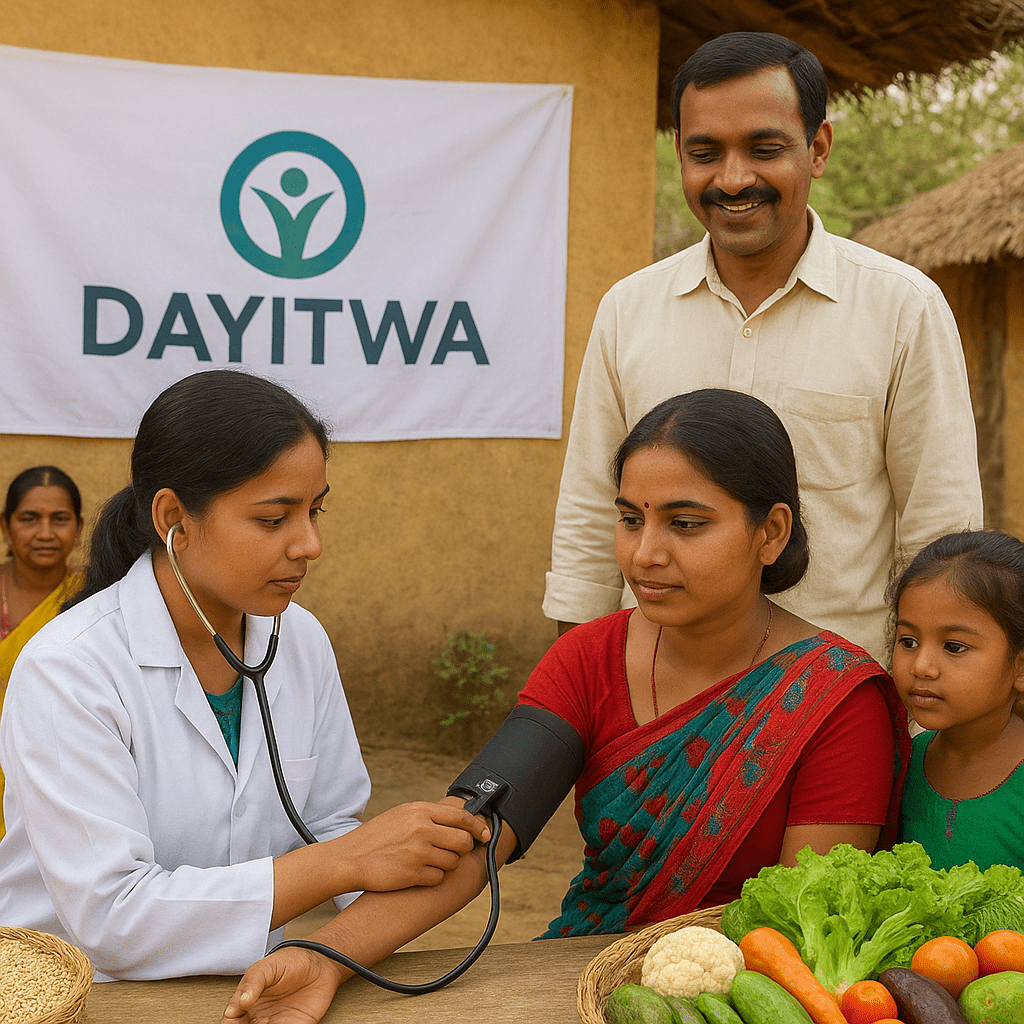
Government programs alone cannot solve this issue. NGOs play an important role in reaching underworld communities. Dayitwa NGO is actively employed: Run free health camps in villages .Spread awareness about hygiene, hygiene and nutrition. Support pregnant women and child health programs. Provide consultation and awareness on mental health. Collaborate with doctors for low cost treatment. By working at the bottom level, NGOs such as dayitwa pull the distance between government policies and real people .
Solutions of Health Care Problems in India
1. Strengthen the rural structure Although there are about 65% of the population in the rural areas of India, healthcare facilities are often missing or undeveloped. Strengthening rural infrastructure means more than just building buildings. It includes: Equip rural health centers from modern diagnostic machines, maternity wards and emergency care units. Ensure uninterrupted electricity, clean water and digital connectivity so as not to disturb the treatment. Deployment of mobile clinics that can reach remote villages on a regular schedule.While villagers can accuse reliable medical care near their homes, issues such as delayed treatment and preventable death can be significantly reduced.
2. A major challenge to doctors and nurses is reluctant to trained doctors and nurses to work in rural or semi-urban areas due to poor facilities, infrastructure and low income. To solve this: The government can provide more salaries, free housing and educational assistance for the children of medical professionals posted in rural regions. Career benefits such as fast track b ions or scholarship for further study can be tied to rural service. Telemedicin hubs can guide experts in cities operating in remote areas. Such steps can balance the Doctor’s Cutter-Patriards and make rural postings more attractive.
3. Expansion of health insurance coverage One of the biggest reasons behind the problem of health care in India is the cost of pocket. Most people pay directly for treatment, which often push them into debt. Extension of health insurance coverage means: Creating schemes like Ayushman Bharat include more incorporating and ensuring that middle class families also have affordable options. Creating awareness drives in local languages so people really know and use these plans. Collaborating with private insurance companies to design low-cost plans tailored for daily wage workers and farmers. When insurance penetration improves, families will no longer have to choose between treatment and financial stability. India. Preventive health care in India is focused on preventive healthcare, but it is the most effective way to reduce the burden of the disease.
4. Preventive care includes: regular examination for diseases such as diabetes, cancer and hypertension, vaccination and early screening. Community awareness campaign on hygiene, nutrition and hygiene before diseases are spread.for example, polio in India has already been eradicated by small investment in the vaccination campaign. Similar preventive measures can drastically reduce pressure on hospitals.School -based health programs to educate children on a healthy lifestyle habit at the beginning of life. For example, polio in India has already been eradicated by small investment in the vaccination campaign. Similar preventive measures can drastically reduce pressure on hospitals.
5. Mental health initiatives The challenges of mental health are increasing in India. Frustration, anxiety, examination stress and workplace burnout are on the rise, yet the stigma prevents open communication. The solution is needed: Training community health workers to identify early signs of mental illness and provide first line counseling. Helpline and Plat Setting Platforms where people can secretly get help. Integrate mental health services into primary healthcare, so that it becomes as common as fever treatment. An awareness campaign to break legends such as “mental illness is a weakness” or “therapy is just for the rich”. By treating mental health compared to physical health, India can save lives and improve productivity.
6. Public-private partnership (PPP) There are advanced hospitals, skilled doctors and technologies in the private sector in India, but Access Cesses are limited to those who can afford. Public-private partnership can overcome this distance: Allowing private hospitals to provide subsidized treatment for poor patients in exchange for tax benefits or government funds. In the same field we are sharing advanced diagnostic equipment between the government and the private hospitals. Collaboration in training programs for nurses, midwife and technicians. Such partnership ensures that resources are used effectively and reaching a wider population.
7. Benefits of technology and digital health Especially in remote areas, technology can be a sports-changer in reducing the problem of health care in India. Some ways to use technology include: Telemedicin: City doctors can consult patients with rural villages via video calls, reduce travel costs and save time. Health applications and digital records: Citizens can digitally store medical history, making treatment more accurate and efficient. AI and data analysis: Predictable forecasts (like dengue or flu) so that preventive action can occur. Werable devices: affordable fitness trackers can help monitor blood pressure, sugar and heart rate, promoting preventive care. If well implemented, digital health can reduce urban-rural division and incorporate healthcare more.
8. Promoting people’s participation Without people’s involvement, no healthcare system can be successful. Public partnership means that communities take responsibility for improving their health status. Examples include: Training to local volunteers to spread awareness about hygiene, nutrition and vaccination. Self-help groups of women working to promote mother and child healthcare. Students of school and Callege Ledge participate in awareness drives, blood donation camps and sanitation campaigns. When communities are actively involved, healthcare solutions become durable and long -lasting. Future point of view India has resources and talents to solve its healthcare crisis. With its young population and growing economy, investments in healthcare can create a healthy, strong nation. If government plans, NGO efforts and support of the private sector come together, India can achieve the goal of “health for all” in the near future. End Health care problems in India are not just about hospitals – it’s about accesses, affordable and awareness. There are many challenges, from lack of doctors to neglect of mental health. Nevertheless, with government reforms, NGO initiatives like Dayitwa and collective efforts from society, solutions are possible. Health is a fundamental right, no privilege. To create a really strong India, healthcare should reach every citizen, rich or poor, rural or urban
conclusion
India’s healthcare problem is not just about hospitals or doctors – it’s about access affordable, awareness and education. There are many challenges, from rural infrastructure gaps to neglected mental health. However, the solutions are within the reach. If government schemes, private sector partnerships and bottom NGOs come together, India can achieve “health for all”. In this journey, organizations like Dayitwa play a crucial role. Healthcare Access Preventive Care, and especially in Dayitwa programs ensure their initiative of health education ensures that people learn how to live a healthy life not only but but also to live a healthy life. By spreading awareness at the community level, they help citizens prevent diseases before starting, reducing the overall load on hospitals. Health is a fundamental right, no privilege. To create a really strong India, every citizen – wealthy or poor, rural or urban – must have quality healthcare and health education. With collective efforts, India can transform its healthcare system into one, affordable and durable.
FAQS
Q1. What is the main problem of health care in India? The biggest challenge is that especially in rural areas, lack of affordable and accessible healthcare.
Q2. How does healthcare affect poverty in India? High medical costs are pushed to millions of families in debt and poverty every year.
Q3. What is Ayushman Bharat? It is a government plan that provides free health insurance of LAKH 5 lakhs every year for poor families.
Q4. What role does NGOs play? They manage health camps, raise awareness, promote preventive care, and support maternity-child health programs. Q5. How can India fix its healthcare system? By strengthening the infrastructure, training the more doctors, expanding insurance and focusing on preventive health and mental well -being.
Q6. Why is mental health important in health care? Because without mental well -being, physical health and productivity are also affected. Avoiding mental health worsens the overall healthcare crisis.
Q7. What is the role of technology in solving healthcare problems? Telemedicine, consultations can be accessible to healthcare for people in remote areas in remote areas.