Rural Development Ngos play an essential role in deciding the future of India. Approximately 65% of the population in India live in villages, the development of rural communities is the primary determinant of the development of the nation as a whole. Nevertheless, millions of people in rural India live a harsh reality. The provision of basic needs such as roads and transport, access to quality education, healthcare service, unemployment opportunities and fairness for women is still lagging behind rural capacity.
These challenges are not just the number on one report – they represent the real conflicts faced every day. A young girl is exiting school as there is no secondary education facility in her village, a farmer is forced to move to cities due to low income, or mother traveling miles for basic medical care – these stories reflect the harsh truth of rural life.
By stepping into these intervals, Rural Development Ngos are making changes at the ground level. They go beyond donation, focus on empowerment, stability and community -led solutions that help villages stand on their feet.
Why Rural Development Matters
When we speak of development, we imagine skyscrapers and metro trains, hubs for the tech and modern infrastructure, but the sad truth is development would be meaningless if most of the world did not live in poverty and backwardness. The reality is simple; India cannot shine if its villages are left behind.
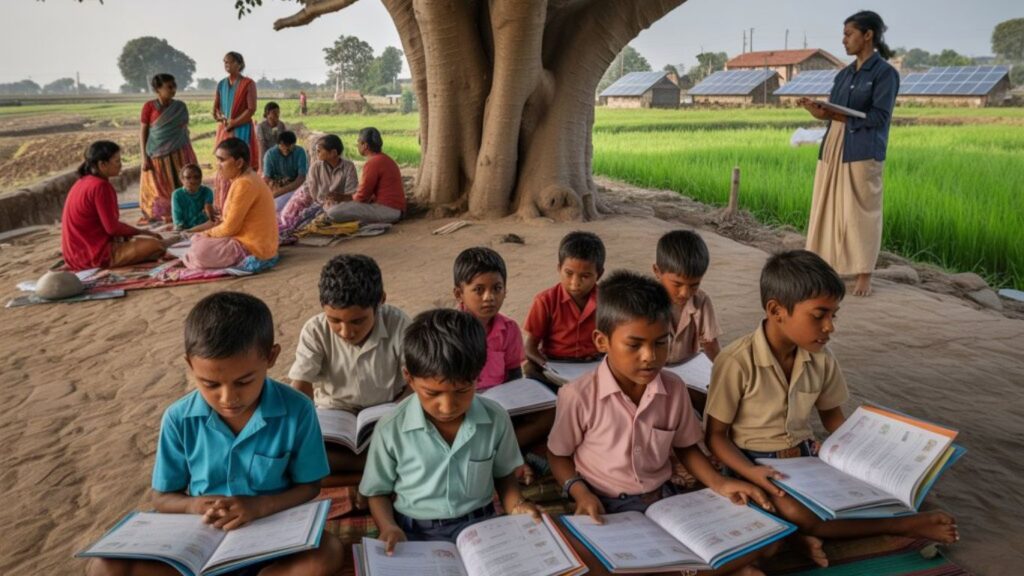
- In Bihar, a young boy wakes up at dawn, runs 5 kilometers to go to a school with only two classes and no proper toilets. Despite their determination, lack of resources often forces children to leave.
- In Rajasthan, a mother struggles to find clean water for her family, spending about four hours a day to bring water from a distance.
- In Odisha, a farmer grows crops using traditional methods, unable to increase his yield because he doesn’t have access to modern techniques or proper irrigation.
These are not isolated cases – they reflect daily difficulties by millions of people in rural India.
Now, imagine access to a well -equipped school near the same boy, mother using a water purification unit established by an NGO, and farmers receiving training in organic
Cultivation and access to government subsidies. The change is notable – and this is possible with the intervention of rural development NGOs.
What Makes Rural Development Ngos Unique?
Unlike large-scale government programs, which often operate the top-down, NGOs adopt a lower-up approach. They directly connect with the community, listen to their needs, and design solutions that are locally relevant, inexpensive and durable.
- They construct schools, libraries and vocational training centers to empower children and youth.
- They set up health camps, mobile clinics and maternal care centers to improve healthcare
- They promote women’s self-help groups (SHG) and skill development initiative to promote economic freedom.
- They introduce environmentally friendly farming practices and water conservation methods for sustainable agriculture
This direct engagement ensures that benefits reach those who need them most.
Rural development is not just about delivery of immediate relief, it is also about the need to break the cycle of poverty. When education expands, literacy increases.When healthcare improves, life expectancy increases. When women are empowered, the entire communities flourish.When farmers are educated, production increases.
Thus, the sectors of rural development NGOs are about creating an environment where rural communities can grow in dignity and self-sufficiency.
Join the movement for rural change
Every small step is counted to empower villages. By supporting rural development NGOs, you are not only donating money-you are investing in education, healthcare, skill-building and sustainable livelihood for millions of people.
[Donate now] to help a child go to school.
Together, we can find the gap between urban and rural India and create a future where no village is left behind.
Challenges in rural development
Despite India’s impressive economic development in recent decades, rural areas are left behind. Inequalities between urban and rural life are clear in almost every region. Let us break some major challenges that Rural Development NGOs constantly try to address
Education is a fundamental right, yet millions of rural children live out of school. Reasons include
- Shortage of proper schools and teachers in villages.
- Long distance to reach the nearest school.
- Economic obstacles that forces children in child labour.
- Gender bias, where girls are often discouraged by chasing education

Without education, the cycle of poverty continues from one generation to another. Here, rural development non -governmental organizations have access to basic learning opportunities to ensure that children have access.
2. Healthcare deficiencies
Access to healthcare in rural India is extremely limited
- Villages often lack hospitals, trained doctors and proper medical facilities
- Maternal and infant mortality is higher than in urban areas.
- Preventive healthcare and awareness are almost absent, causing untreated diseases.
To bridge this difference, rular development NGOs organize medical camps, provide mobile health vans, and spread awareness about cleanliness and nutrition.
3. Employment and poverty
Most rural families rely on agriculture, but
- Small land holdings and irrigation deficiency make farming unprofitable.
- Migration in seasonal unemployment cities.
- The absence of commercial skills keeps rural youth out of non-agricultural jobs.
By starting skill training and supporting small businesses, rural development ngos helps families find alternative income sources.
4. Gender inequality
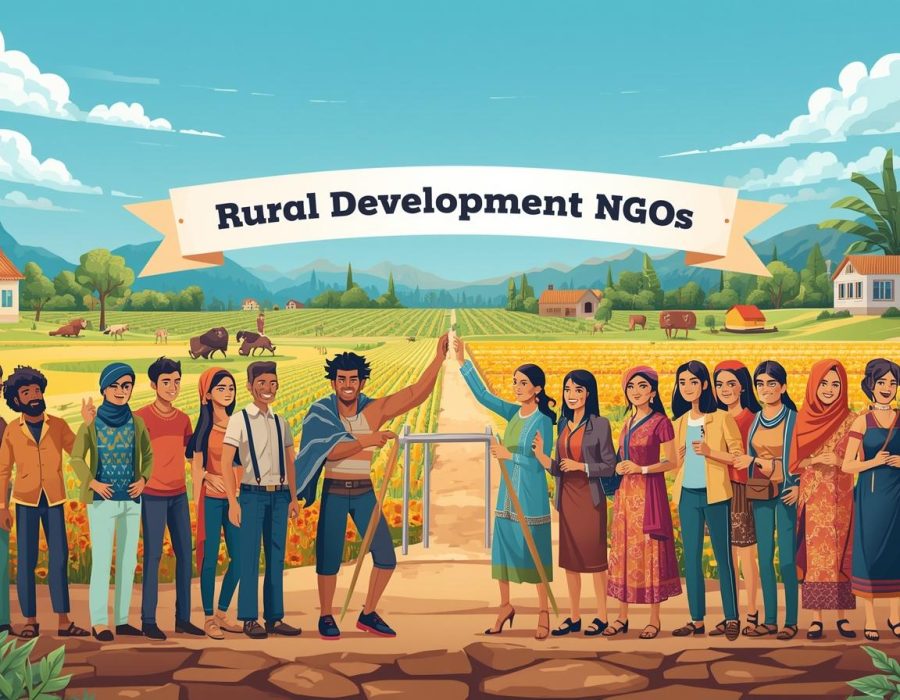
Women in villages often face discrimination and lack of opportunities
- Many have been excluded from education and decision making.
- Early marriages and domestic responsibilities limit their freedom.
- Economic dependence on men further prohibits their role in society
Through awareness campaigns and women’s self-help groups, rural development NGOs empower women to play the role of leadership in their communities.
5. Infrastructure interval
Bad infrastructure blocks progress
- Lack of proper roads separates many villages.
- Electricity and clean drinking water in many areas are still unavailable.
- Digital connectivity is weak, limiting access to knowledge and opportunities
Cooperation with local authorities, RuralDevelopment NGOs push for better infrastructure and also offer low cost, community-based solutions
Role of rural development NGOs
The role of a rural development NGO is multifaceted. They not only solve immediate problems, but also create long -term permanent solutions.
1. Strengthening Education
- NGO established Community Schools, Teaching Centers and Mobile Classes.
- Provide scholarship and study material to disadvantaged children.
- Parents who run awareness campaigns assure them to send girls to school.
- Traine local youth as teachers and masters, ensure stability
2. Improvement of healthcare
- Organize health camps, vaccination drives and mobile medical units.
- Educate villagers about hygiene, nutrition and preventive care.
- Participated with doctors and hospitals to provide cheap treatment.
- Support maternal care programs to reduce infant and maternal mortality.
3. Empowering Through Livelihoods
- Provide skill development programs in tailoring, carpentry, digital literacy, and handicrafts.
- Provide training to farmers to use modern and organic farming methods.
- Form self-help groups (SHGs), specifically for women, to facilitate microfinance and small businesses.
- Create women’s cooperative societies to encourage collective entrepreneurship.
- Provide leadership and financial training to rural women.
- Support campaign against child marriage and domestic violence.
- Encourage girls to carry forward education and vocational training.
5. Construction infrastructure and connectivity
- NGOs cooperate with local authorities to improve roads, hygiene and water supply.
- Promoting renewable energy solutions such as solar lamps and biogas plants.
- Provide internet access and digital training for rural youth.
Case Study 1: Education in Bihar
In Bihar, an NGO started a program called “School on Wheels”, where a bus was converted into a mobile orbit. It traveled in remote villages, provided free education to children who had no access to schools otherwise. In three years, more than 2,000 children learned basic literacy and numerical, many later joined the mainstream schools.
An NGO that focuses on women’s empowerment in Rajasthan established self-help groups (SHGs) and trained women in handicrafts and textile work. Today, thousands of women are not just able to earn money for their families; they also support their daughters in obtaining an education, breaking cycles of gender inequality that have persisted for years.
Case Study 3: Healthcare in Odisha
In Odisha, a rural development NGOs established a mobile health van equipped with basic drugs and clinical facilities. These vans visit remote areas weekly, providing healthcare up to more than 50,000 villagers annually. As a result, prevention of prevention has decreased significantly.
Case Study 4: Agriculture in Maharashtra
In the dry areas of Maharashtra, farmers were taught methods of water conservation such as rainwater harvesting and drip irrigation. Crop productivity improved 40%, reducing migration in cities. The initiative led by the NGO changed the economic condition of the community.Rural Development NGOs
Measuring the Impact of Rural Development NGOs
The work of rural development NGOs is far ahead of providing temporary relief. Their goal is to bring average and long -lasting changes in rural communities. Over the years, their efforts have shown visual effects in areas such as education, healthcare, livelihood and women empowerment.
Here are some major data that highlights the differences made by NGOs in rural development:
Education: According to various NGO reports, more than 3 million rural children have been nominated in schools through community education programs and non-formal education centers. The literacy rate in many villages has increased by 20–30% within a decade.
Healthcare Mobile health clinics run by NGOs have reached more than 10 million villagers in states like Odisha Bihar and Uttar Pradesh. Vaccination coverage in NGO-supported areas has improved 40%.
Livelihood Vocational training initiatives have enabled about 2 million rural youth and women to get permanent employment. Domestic income has increased by up to 35%in NGO intervention villages.
Women Empowerment Self-help groups of women supported by rural NGOs have collectively rescued and reinstated in small businesses and community projects and more than 500 crores.
Infrastructure: Renewable energy projects led by NGOs have provided solar electricity to more than 50,000 houses in remote villages.Rular Development NGOs
Success Stories of Change Through Rular Development NGOs
The Girl Hu became a teacher
In a small village in Uttar Pradesh, Meena, a 12-year-old girl, was out of school due to inability to pay school fees. A local NGO intervened; He was working in this field and brought Meena to his free community teaching center. He also talked with his parents and educated them on the importance of girls’ education.
Rural Development NGOs Not only did Meena finish the school, she continued to conduct a higher education scholarship. Today, he is working with the same NGO as a teacher who runs his school, and teaches hundreds of children in his village. This is the ability of rural development NGOs; A risky child becomes the leader of a change in relation to literac
Farmers receive hope in Maharashtra
Dried areas of Maharashtra often see a comprehensive peasant crisis. An NGO introduced methods of water conservation, including check dams and drip irrigation systems. Farmers were trained in crop diversification and organic agricultural techniques. Within four years, crop yields increased by 40%, and farmer suicides in the community declined significantly.
Today, these farmers not only maintain themselves, but also train others in nearby villages – create a wave effect of positive changes.
Women entrepreneurs in Rajasthan
In rural Rajasthan, women were once limited to household chores. A rural development NGO formed self-help groups and trained them in textile production. Initially hesitated, women gradually mastered crafts and started selling their products in local and online markets.
Today these women receive a steady paycheck send their kids to school and earn respect in their families and communities. For example Sunita Devi leads the cooperatives of 300 women artisans. Their story demonstrates the way that NGOs empower women, as they become the economic pillar of society.
Healthcare access in remote Odisha
For decades, there was no medical facility in a group of villages in Odisha. The villagers had to travel more than 30 kilometers for basic treatment. A rural development NGO started a mobile health van program with doctors, nurses, and essential medicines.
Over time, vaccination rates improved, maternal health care became accessible, and the villagers learned preventive practices. The infant mortality in the area fell to 60% within five years. For these communities, NGO not only did healthcare but also were expected to.
The Ripple Effect of Rural Development NGOs
Rural development makes NGOs really impressive, this is the multiplier effect:
A child who gets educated inspires brothers and friends.
A woman who acquires financial freedom inspires other women.
A farmer trained in modern methods shared his knowledge with neighbors.
A community that receives clean drinking water sees overall improvement in health and productivity.
This wave effect ensures that NGO intervention does not only help individuals, but uplift the entire communities for generations.
Be Part of the Wave Effect with Rural Development NGOs
Inspirational stories and numbers explain how rural development NGOs are re -writing the future of villages in India. But this change cannot be alone – it requires collective efforts.
[Donate now] – Your contribution can send a child to school, provide medical help, or train a farm
How Rural Development NGOs are creating permanent changes
The development of gone is the rust of Sirf Infrastructure Banana Nahi, Balki is to create an AC AC environment. ISI Vision Ko Reality Bane Lai Rural Development NGOS Ground Level working across
NGOS has a permanent livelihood in the huge contribution. Farmers KO Naye to teach Nai Agricultural Practices, Organic Farming Karne Rhythm Training Dena, and provide market access, Karna provides UNKE income levels KO improves KO directly. Apart from this, NGOS renewable energy solution jaise solar power aur aur aur biogas plants village Tak Pohcha Rahe Hain, Jo Long-Term Me Energy Independence ka Examples Han.
Education and skill development bhi inka ek core area hai. Villages Me Digital Learning Hubs, Vocational Training Center, AUR Women’s Entrepreneurship Program Kai Ja Raha. Isse Youth and Women Dono to API Carrier and Nay Opse Han.Rular Development NGOs also have a strong impact on healthcare and sanitation. Awareness drives, health camps, and clean drinking water projects have corrected the health indicators of the villages.
These NGOs are like Comt Carts, which have created a strong connection between government policies and rural communities. Their efforts have shown that when community participation and NGO support come together, real permanent change is possible.
Rural development NGOs understand the real strength of villages and give them new opportunities. Through education, healthcare, women’s empowerment, and agricultural innovations, these NGOs are not only changing villages, but also strengthening the foundation of a permanent and progressive India.
In today’s era, rular development NGOs are acting as a catalyst. They create new opportunities for villagers and improve the quality of their life. Their projects are not limited to development only, but are designed for a long -term vision and community -led development.
Conclusion
The villages of India are the foundation of the country. Without inclusive rural development, true development remains incomplete. The efforts of rural development NGOs prove that change is possible even in the most challenging circumstances. From giving children access to schools, empowering women, improving healthcare, and training farmers, these organizations are creating communities that are self-sufficient, durable, and ready for the future. Write to Us Directly on Gmail