 Dayitwa NGO is driven by the belief that child education is the foundation of a stronger, brighter future. What began as a small initiative with a rented classroom and a few books has now grown into a mission that touches the lives of hundreds of children. The organization focuses on creating equal learning opportunities for children who might otherwise be left behind due to poverty, social barriers, or lack of resources.
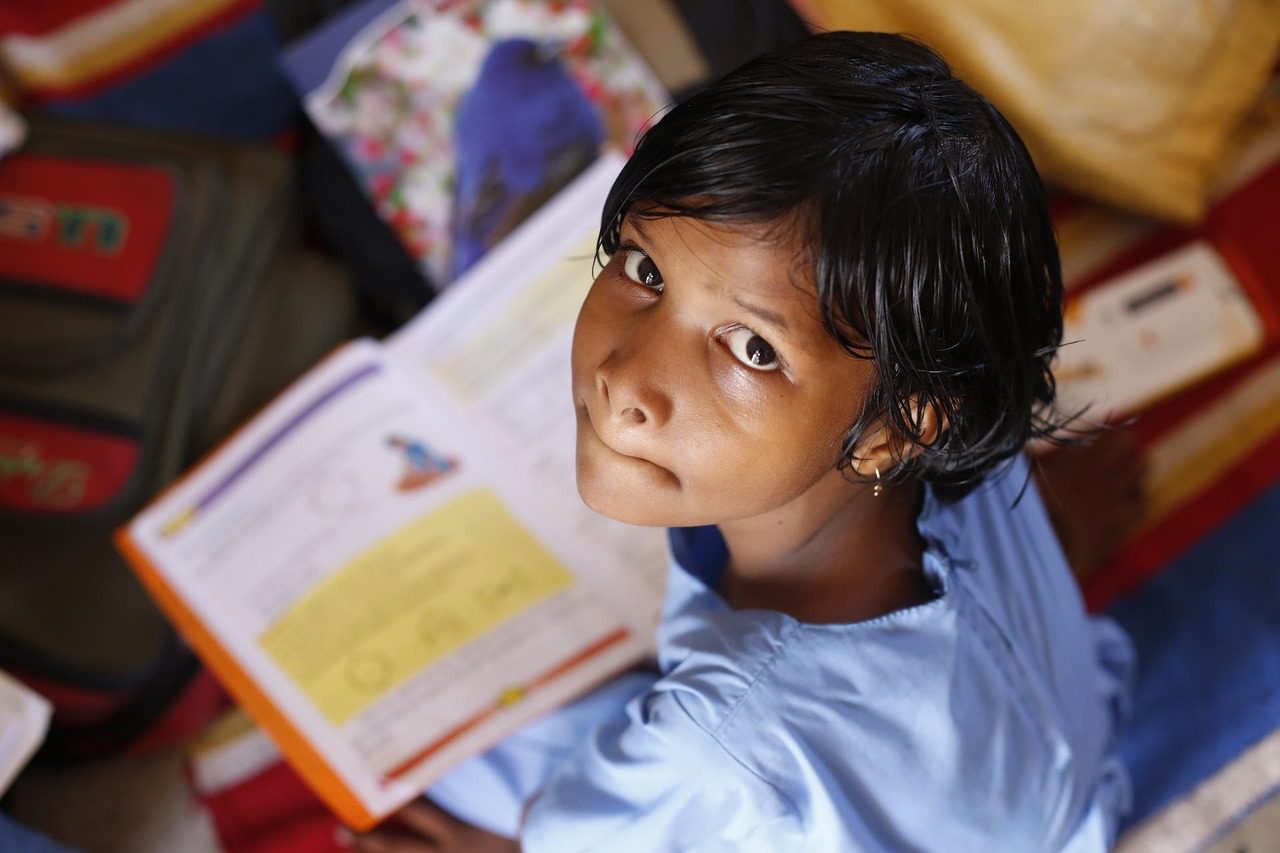
The child with a book for the first time takes more than only pages filled with words. They promise hope, dreams and a bright future. But millions of children never get a chance. Poverty, inequality, and lack of access to schools keep them away from education. This is the place where Dayitwa NGO has stepped forward. With the mission of spreading child education, Dayitwa NGO is giving children not only books, but a way of writing opportunities, confidence and their future again. This blog takes you through their journey, their programs and life-growing effects of education on children and society.They realized that Child Education could break the cycle of poverty and open doors to possibilities they had never imagined.
1.Why Child Education Is the Key to Progress
Child education is more than sending children to school only. Education gives children the skills that they need to earn livelihood, seriously think and make better decisions. With child education, children can dream a big dream and work towards the life of dignity
For poor families, it gives a chance to move beyond generational conflicts. A single child who studies and succeeds, often motivates brothers, sisters and even neighbors to follow the same path.
-
- Breaking the cycle of poverty – an educated child has a better possibility of earning and supporting his family.
-
-
- Better health results-school teach cleanliness, nutrition and awareness, improves the good of the family.
-
- Sexual equality – Child education reduces child marriage and strengthens girls
-
- Better health results-school teach cleanliness, nutrition and awareness, improves the good of the family.
-
- Gender equality – Child education reduces child marriage and empowers girls.
-
- Future leaders-today students become the leaders, entrepreneurs and changes and builders of tomorrow.
2.The Beginning of Dayitwa NGO
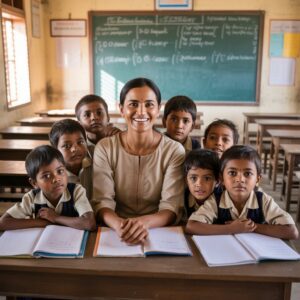
Every major change often starts with a small step, and the story of Dayitwa NGO is no different. The organization began with a rented class, a dream compared to a handful of children and their resources. With no fancy furniture or high-ending equipment, volunteers painted by hand on the borrowed books and blackboards. He had a shortage of money, made with determination and passion.
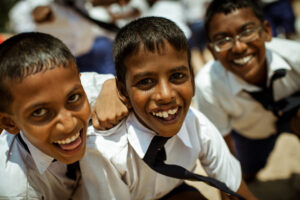
Initially, many parents were hesitant. He believed that his children should work to support the family instead of spending time in the classroom. In the houses where every rupee spoke, sending a child to school felt like a luxury. But the volunteers of Dayitwa NGO knew that child education was not a luxury – it was a need.
Through the patient’s interaction, community meetings and simple examples, they showed families how education could create opportunities for a better future. Gradually, the doubt began to fade. Parents started looking at small changes in their children – trust in reading, curiosity in learning and happiness to get something new. He realized that child education could break the cycle of poverty and open the doors for the possibilities he had never imagined.
3.Challenges Children Face in Education
The path of child education is not always smooth. While education is a right, it often looks like a privilege for those living in poverty. One of the biggest challenges is poverty.
Families struggling to survive often asks their children to work rather than studying. Paying for books, uniform, or even paying for transport is impossible when it is a priority of food. For these children, the dream of learning seems far from access.
Another obstacle is child labor. Many children work in their days farms, factories or small shops. The hours that should be filled with lessons and sports, they are lost for labor, cut them with the benefits of child education. Sexual inequality also plays a role.
In many families, girls are expected to stay at home, help work, or marry quickly. This refuses to give them a chance to make independent futures. For them, child education is often sacrificed in the name of tradition. Children in rural areas also struggle with distance and lack of infrastructure. Sometimes walking miles to reach a school without appropriate roads discourages appearance. Even when they arrive, congested classes and untrained teachers weaken the quality of learning.
These obstacles show why organizations like Dayitwa NGO are necessary.
4.How Dayitwa NGO Supports Child Education
Dayitwa NGO believes that true education is not limited to classes. To be meaningful child education, children require an environment where they feel supported, motivated and free from everyday struggles. This is the reason that the organization has prepared programs which are beyond basic schooling and focus on overall development.
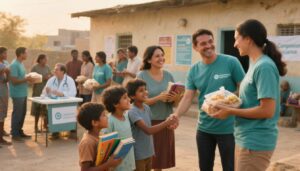
Dayitwa NGO also provides scholarship and material assistance to ensure poverty, which does not prevent children from learning. Free books, uniforms, stationery and even mid-day meals are introduced to families that cannot bear these essential things. It removes financial pressure that often prevents children from continuing their studies. A special focus is focused on girl education.
The NGO runs awareness campaign, provides bicycles for safe travel in schools, and works with families to encourage equal opportunities for girls. By doing this, they challenge traditional obstacles that keep young girls at home. Teacher and voluntary training is another important part of his strategy.
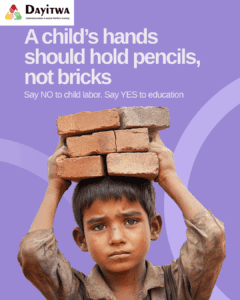
Scholarship and supply
-
- Uniform and school bag
-
-
- Mid-day meal for nutrition Examination fee
-
- Free books and stationery
-
- support
Girl child education program : Special scholarships, safety supports, and campaigns that encourage parents to educate daughters equally.
Teacher and voluntary training :Training programs ensure that teachers use interactive methods such as games, storytelling and group discussion to keep children.
Awareness drive : Street plays, village meetings and parents’ workshops show families how child education brings long-term benefits.
Real-Life Stories of Transformation
Story of Meena: Meena was told that the education was “not for girls.” Dayitwa NGO convinced his parents to join their center. Today, she reads her brothers and sisters and dreams of becoming a teacher.
Story of Aarav: Aarav sold balloons at a railway station. With NGO support, he joined classes. Today, he gains excellence in science and wants to become a doctor.
Community impact: In a village, the dropout rate fell 70% after a three -year day. Parents now proudly send their children to school.
The Wider Impact of Child Education
The true power of child education is very much beyond personal success. When a child in a family also receives an education, the benefit comes out throughout the community. A single educated child often inspires siblings, neighbors and even parents to see learning in a new light.
The biggest impact of child education is on a decrease in poverty. Children who go to school are more likely to secure better jobs and high income as adults. It not only improves its own life, but also removes its families with financial difficulty. Over time, communities with higher education levels see strong economies and more opportunities.
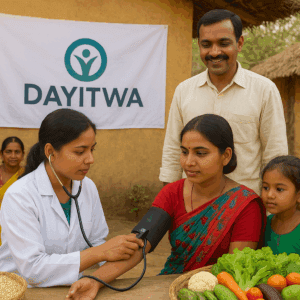
Education also improves health and welfare. Schools teach children about cleanliness, nutrition and preventive healthcare. As these children grow in adults, they make a healthy option for themselves and their families, which reduces the disease and leads to prolonged life expectancy.
Child education also helps in reducing social problems like child marriage, gender inequality and child labor. Educated children have more information about their rights and are less likely to be exploited. Girls who study are more powerful to make their decisions and make independent futures.
Role of Technology in Child Education
In today’s world, technology has become a bridge to learn, and Dayitwa NGO is using it to strengthen child education. For many children in remote or understanding areas, schools are far away, resources are limited, and teachers are less.
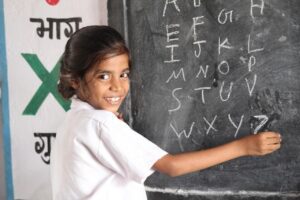
Technology helps in filling these intervals and brings education directly to children who are attractive and accessible in ways. One of the most effective initiatives is the use of a digital learning kit. These pills come preloaded with lessons in subjects like mathematics, science and language.
The material is designed in simple formats so that children can understand and enjoy the learning process even without continuous supervision. For children who never had access to books, these tools make knowledge alive. Dayitwa NGO also conducts online classes, volunteer connects teachers with children from various places who require additional support.
This approach not only improves the quality of child education, but also exposes children to new ideas and cultures. Another exciting step is the use of educational apps. These apps convert subjects into games, making it easy to understand difficult concepts.
Learning through sports keeps children motivated and curious. By combining traditional teaching with modern equipment, Dayitwa NGO ensures that child education is not left behind in the digital age. Technology is not just a luxury; This is a requirement that can bring equal opportunities for every child, no matter where they live.
How You Can Contribute
The spread of child education is not only the responsibility of organizations; Everyone can play a role in giving children the opportunities they deserve. Every small effort matters and can cause a wave effect that changes life and communities.
Your contribution directly supports child education and opens the doors for new possibilities.
Another meaningful way to contribute is voluntarily. Spending time as a teacher, patron or tutor helps children to understand lessons better and increases their confidence. Volunteers can also conduct learning activities, storytelling sessions and sports that make education pleasant. Your time and guidance strengthens the foundation of child education for every child you support.
Advocacy is equally important. Sharing stories, successes and challenges on social media increases awareness about the importance of child education.
Finally, it is important to support girls’ education Supporting child education today helps in creating a bright, more equitable tomorrow for all children.
Future Vision of Dayitwa NGO
Dayitwa NGO has always admitted that child education is the key to strong communities and bright future building. Another important initiative is to provide digital learning access to 10,000 children .
Through tablets, online classrooms and educational apps, children in remote villages will be able to continue their studies, even if traditional schools are unavailable. This modern approach ensures that hair education maintains changing times and with technology.
Dayitwa NGO aims to train over 500 teachers and volunteers by 2030. With these schemes, Dayitwa NGO imagines a future where child education is accessible, inclusive and strong for every child. Community support, technology and dedicated teachers, NGOs are creating a generation of learners who will shape a better, strong and more justified society.
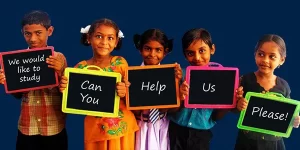
Conclusion
The story of Dayitwa NGO shows us that change is not always big. Sometimes it begins with a rented class, some books and a dream.By supporting child education, we don’t just help a child – we build a bright construction tomorrow for all.
The future of every nation lies in the hands of its children. By supporting child education, we are not just helping one child at a time; we are laying the bricks for a brighter tomorrow where knowledge defeats ignorance and dreams replace despair. The mission of Dayitwa NGO is a call to action for all of us. Whether through volunteering, donating, or simply spreading awareness, each effort counts. Together, we can ensure that every child holds the pen to write their own future.